
Hypertension is a commonest chronic non-communicable disorder found all over the world. It is also called a silent killer because in this patient remains mostly asymptomatic.
आयुर्वेद में हाइपरटेंशन को रक्तगत वात शब्द दिया गया है | एवं यह रक्तगतवात धमनी, सिरा, व हृदय से सम्बंधित रोग है | रक्तचाप की दर व्यक्ति की आयु, शारीरिक एवं मानसिक कार्यशीलता, परिवारिक पृष्ठभूमि तथा उसके खानपान पर निर्भर करती है|
Types of Hypertension –
1. Primary or essential hypertension – The hypertension of unknown origin.
2. Secondary hypertension – Hypertension with an identifiable cause secondary to another disease such as renal disease or tumor.
3. Isolated systolic hypertension – Most common in old age due to reduced vascular compliance.
Systolic Pressure > 160 mm of Hg
Diastolic Pressure < 90 mm of Hg.
4. Neurogenic hypertension – It can be caused by strong stimulation of the sympathetic nervous system. (e.g. when a person becomes excited for any reason or state of anxiety).
Classification of Hypertension-
Systolic B.P. Diastolic B.P.
A. Optimal B.P 120 80
B. Normal B.P. 130 85
C. High normal 130-139 85-89
D. Stage 1 Hypertension 140-159 90-99
E. Stage 2 Hypertension 160-179 100-109
F. Stage 3 Hypertension 180 110
Main Cause ( मुख्य कारण ) –
High blood pressure is a common condition in which the long-term force of the blood against your artery walls is high enough that it may eventually cause health problems, such as heart disease.
Blood pressure is determined both by the amount of blood your heart pumps and the amount of resistance to blood flow in your arteries. The more blood your heart pumps and the narrower your arteries, the higher your blood pressure. It is considered to be present when a person’s systolic blood pressure is consistently 140 mm Hg or higher, and their diastolic blood pressure is consistently 90 mm Hg or higher.
Etiology –
– Hereditary
– Excess salt intake
– Sleep apnea
– Secondary to disease (e.g. polycystic kidney disease or chronic glomerulonephritis, adrenal disease, Cushing’s syndrome and coarctation of aorta etc.)
– Certain medications (e.g. NSAIDS, steroids, throat lozenges, and peptic ulcer medicines)
Pathogenesis –
Development of Hypertension more depends on environmental factors, rather than simple ageing. The pathophysiological mechanism includes an increase in peripheral vascular resistance, secondary to arteriolar smooth muscle vasoconstriction with lower plasma renin activity and low aldosterone levels.
Risk factors –
– Child of Hypertensive parents
– Obese person
– Age > 45 years
– Gender (men and postmenopausal women)
– Diabetes mellitus, dyslipidemia
– Physical inactivity
– Smoking, alcoholism
Acc. to Ayurveda –
निदान –
आहारज निदान – गुरु, अभिस्यंद, स्निग्ध, कटु, अम्ल, लवण, अतिसेवन
– अतिभोजन,
– क्षार का अतिसेवन
– तीक्षण आहार अतिसेवन
– मद्य सेवन
– विदाही, अम्ल आहार सेवन
– अति मधुर व संतर्पक आहार सेवन
विहारज निदान –
– वेग धारण
– अति व्यायाम
– भय
– शोक, क्रोध
– चिंता
– अचेष्टा
– दिवास्वपन
– धूम्रपान
अनुचित खानपान, अत्यंत गरिष्ठ भोजन का सेवन तथा शारीरिक व्यायाम की कमी उच्च रक्तचाप के प्रमुख कारण हैं| विशेष कारणों से पाचन क्रिया के मंद पड़ने से भोजन से आम (acidic toxin) उत्पन्न होता है जो रक्त में प्लाज्मा से संयुक्त होकर साम (Blood+Toxin) का निर्माण कर देता है. ‘साम’ सामान्य रक्त से अधिक घनिष्ट और भारी होता है जिस कारण ये रक्तवाहिनियों के कमज़ोर हिस्सों में जाकर जम जाता है. इस कारण रक्त धमनियों की चौड़ाई कम हो जाती है और रक्त को स्रोतों (channels- arteries) में वहन करने में अवरोध आता है और इस कारण धमनियों में अधिक दबाव या ‘ब्लड प्रेशर’ का निर्माण हो जाता है.
Symptoms ( लक्षण ) –
Hypertension is quite common. Hypertension typically develops over the course of several years. Usually, you don’t notice any symptoms. But even without symptoms, high blood pressure can cause damage to your blood vessels and organs, especially the brain, heart, eyes, and kidneys. So early detection is important.
– Headache
– Fatigue
– Dizziness
– Transient Insomnia
– Difficulty in sleeping due to the feeling of hot or flushed
– Tinnitus
Acc. to Ayurveda –
– तीव्र रुजा, वैवर्ण्य, दौर्बल्य, अरुचि, अरुषि, स्तब्धता, पैरो में दाह, सवयथु, क्लम, स्पंदन, क्रोध, स्वेदाधिक्य, हृदयद्रव, कर्णनाद, शरीर कम्पन , मूर्छा etc.
Complications –
While elevated blood pressure alone is not an illness, it often requires treatment due to the following short and long-term effects like:
– Cerebrovascular accidents (CVA) or strokes
– Myocardial infarction
– Hypertensive cardiomyopathy (heart failure)
– Hypertensive retinopathy, nephropathy, and encephalopathy
– Congestion in the lungs
– Left ventricular hypertrophy
– Epistaxis
– A blurring of vision owing to retinal changes
– Impotence
– Angina pectoris
Investigations –
– 24-hour ambulatory blood pressure monitoring
– Urine for protein, blood, and glucose
– Serum electrolytes
– Serum creatinine
– Renal function test
– Blood sugar fasting
– Lipid profile
– Electrocardiogram (ECG)
– Chest X-Ray (PA view)
Treatment –
NOTE –
– हाइपरटेंशन के उपचार में लम्बे समय तक ली जाने वाली आधुनिक पद्ति की औषधियो से कभी कभी साइड इफ़ेक्ट स्वरुप किडनी खराब होना, लिवर व हृदय रोग आदि हो जाते है |
– आयुर्वेद औषधियाँ किसी भी रोग में बिना किसी साइड इफ़ेक्ट के रोग को समूल से ठीक करती है | व मरीज़ अपनी जीवनशैली और खानपान का ख्याल रखे तो हाइपरटेंशन को संतुलित रखा जा सकता है।
A. Prevention –
1. Consume plenty of fruits and vegetables such as apple, banana, blackberry, broccoli, cabbage, carrot, garlic, grapefruit, green leafy vegetable, onion, pea, tomato etc.
2. Consume preferably vegetarian, low fat, low calory diet rich in whole grain, high fibre, and nuts
3. Use of garlic and onion in a regular diet
4. Practice physical exercises such as brisk walking daily for 30 – 45 minutes
5. Weight reduction (in obese)
6. Limit use of salt (<5 gm/ day), fats and sweets
7. Avoid day sleep, anger, anxiety, hyperactivity, overexertion
8. Avoid the use of caffeine, alcohol, and tobacco
Acc. to Ayurveda –
पथ्य-
आहार – चावल, दूध, सेव, अंगूर, पपीता, अनार, केला, संतरा, अल्पमात्रा औषधसिद्ध गोघृत, सैंधव, यव, जो, सावा, कोदो, अरहर, मूंग, पालक, हरी पत्तेदार सब्जी, लघु आहार आदि |
विहार – उपवास, व्यायाम, सद्वृत पालन, अधारणीय वेगो को धारण न करना, धारणीय वेगो को धारण करना, लंघन, मर्दन आदि |
अपथ्य –
आहार- लवण, घी, कफ – मेदवर्धक आहार, मिठाईया, मलाईदार दूध- दही, अधिक मिर्च- मसाला, मेवे, अंडे, मांसाहार सेवन आदि |
विहार- अतिक्रोध, अतिश्रम, अतिमार्गमन, अतिचिंता, लगातार बैठना, अतिशीत स्नान आदि |
B. Medical Management –
1. निदान परिवर्जन (avoidance of aetiological factors) –
According to Ayurveda, avoidance of the causative factor is the first line of treatment for all diseases.
2. संशोधन चिकित्सा (Bio-cleansing therapies) –
i. लेखन बस्ति 350-500 ml for 8 days.
ii. विरेचन कर्म (Purgation) with एरंड तेल 15 – 30 ml with a half glass of milk at night
iii.शिरोधारा with medicated liquids (milk/ water/ oils (नारायण तेल ) daily 45-90 minutes for 21 days
iv. तक्र धारा daily 45 minutes for 14 days
3. संशमन चिकित्सा (Palliative therapy) –
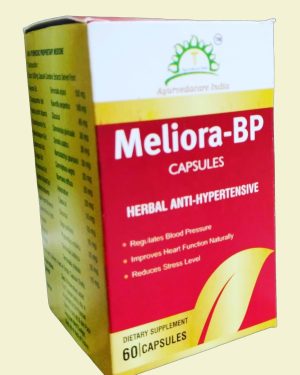
– Meliora-BP Capsules (Ayurvedacare India ) – BUY NOW
– सर्पगंधा ( Rauwolfia serpentine )
– अश्वगंधा ( Withania somnifera )
– जटामांसी (Nardostachys jatamamasi )
– अर्जुन (Terminalia arjuna )
– रसोन (Allium sativum Linn.)
वटी –
– सर्पगंधाघन वटी
– ब्राह्मी वटी
– प्रभाकर वटी
– अर्जुनारिष्ट
– प्रवाल पिष्टी
– नागर्जुनभर रस
– हृदयार्णव रस
योग –
आसन – शवासन , वज्रासन , भुजंगासना, वक्रासन, गोमुखासन, पवनमुक्तासन, कटिचक्रासन, अधकटी चक्रासन, ताड़ासन .
प्राणायाम – चंद्र अनुलोमविलोम, नाड़ीशोधन , उज्जायी, भ्रामरी
Advice for –
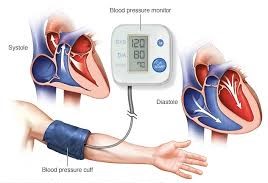
1. Regular blood pressure monitoring
2. Maintenance of weight in the ratio of height
3. Increase intake of potassium, calcium, and magnesium in the diet
4. Relax mind and body by yoga, meditation, and other methods
आयुर्वेदिक उपचार के लिए संपर्क करे – आयुर्वेदकेयर इंडिया , खेमी सती रोड़, झुंझुनू
डॉ. राकेश सैनी Mob.- 9460935150, www.ayurvedacareindia.com